I am a cognitive scientist specializing in the nature and applications of artificial intelligence (Computer Science PhD, Stanford University, 1979). My work combines theory and methods from computer science, psychology, anthropology, and philosophy.
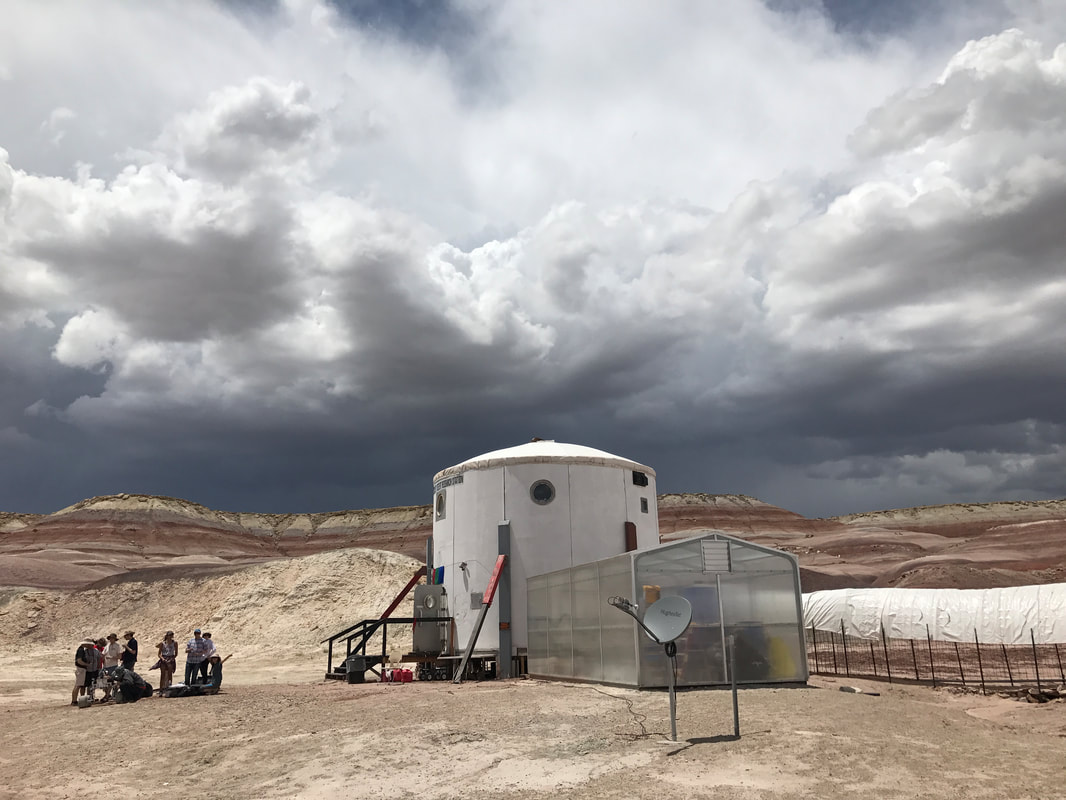
Please refer to my NASA legacy website or use the menu above to access my publications and Mars Society expedition photos and conference presentations.
Now available: Publications Table of Contents (1977–present).
See also: Videos from NASA expeditions.
Please refer to my NASA legacy website or use the menu above to access my publications and Mars Society expedition photos and conference presentations.
Now available: Publications Table of Contents (1977–present).
See also: Videos from NASA expeditions.
- Interview about the nature of Artificial Intelligence: Scientific Design of Tools for Amplifying Intelligence, Research-Technology Management, 64:2, 11-17. 2021.
- Comprehensive review of AI methods, applications, and concerns: How to Think Critically About Artificial Intelligence, Stanford University presentation for “AI, Robotics, and Education” (AIRE) class, 2019.
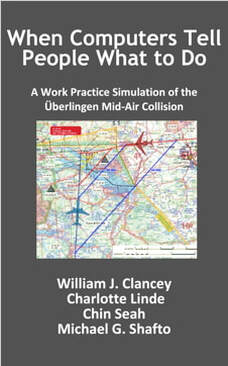
Simulation-Based Failure Analysis: When Computers Tell People What to Do: A Work Practice Simulation of the Überlingen Mid-Air Collision. Amazon Kindle Print Replica e-book. 50 figures, 40 tables, References; and a Glossary. 360 pages.
The traffic collision avoidance advisory system (TCAS) is unaware of instructions air traffic controllers give to pilots. Simulating the perception, beliefs, and actions of controllers and pilots in a fast-changing environment including TCAS reveals how cognitively complex interactions can emerge and technology becomes uncontrolled. We show how a comprehensive model of this work system was developed in Brahms and used to predict design vulnerabilities by systematically simulating alternative behaviors of people and technology.
The traffic collision avoidance advisory system (TCAS) is unaware of instructions air traffic controllers give to pilots. Simulating the perception, beliefs, and actions of controllers and pilots in a fast-changing environment including TCAS reveals how cognitively complex interactions can emerge and technology becomes uncontrolled. We show how a comprehensive model of this work system was developed in Brahms and used to predict design vulnerabilities by systematically simulating alternative behaviors of people and technology.
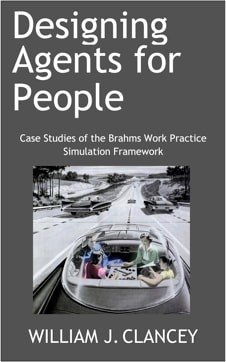
Simulation-Based Automation Design: Designing Agents for People: Case Studies of the Brahms Work Practice Simulation Framework. Amazon Kindle Print Replica e-book. 57 figures, 19 tables, References; and a full Index. 446 pages.
Six case studies describe how to design advanced technology that interacts with people in challenging environments, including cleaning up an oil spill in the ocean, orchestrating firefighting operations, planetary exploration, and running errands with a self-driving car. Each example demonstrates a scientific R&D methodology, using "total system" simulation as a design tool. Funding of such projects is discussed at length, including project reviews, survey & analysis of reviewing approaches.
Six case studies describe how to design advanced technology that interacts with people in challenging environments, including cleaning up an oil spill in the ocean, orchestrating firefighting operations, planetary exploration, and running errands with a self-driving car. Each example demonstrates a scientific R&D methodology, using "total system" simulation as a design tool. Funding of such projects is discussed at length, including project reviews, survey & analysis of reviewing approaches.
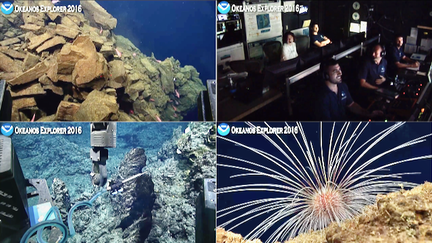
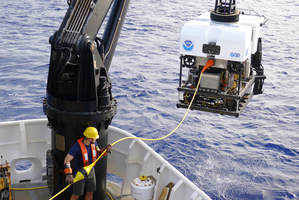
Most recent paper: "Transactional Systems of Exploration and Learning: The Okeanos Explorer," in J. Garrison, J. Öhman, L. Östman (Eds.), Deweyan Transactionalism in Education: Beyond Self-action and Inter-action, 2022, pp. 52–73.
Viewing the people, remotely operated instruments, and the ship as a “collaboration system” for scientific exploration, we unpack "robotic mediation" to reveal a dependent hierarchy of responsibilities, with nested transactional activities. The emergent multidisciplinary coordination is a kind of dance that pursues intellectual interests within the technical operating constraints of the technology and the physical safety of the ship.
Viewing the people, remotely operated instruments, and the ship as a “collaboration system” for scientific exploration, we unpack "robotic mediation" to reveal a dependent hierarchy of responsibilities, with nested transactional activities. The emergent multidisciplinary coordination is a kind of dance that pursues intellectual interests within the technical operating constraints of the technology and the physical safety of the ship.
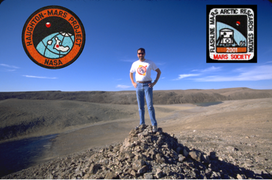
Recommended: "Spatial Conception of Activities: Settings, Identity, and Felt Experience," in T. Hüenefeldt & A. Schlitte (Eds.) Situatedness and Place: Multidisciplinary Perspectives on the Spatio-temporal Contingency of Human Life, 2018, pp. 81–110. With many illustrations, it synthesizes all my work on situated cognition, socio-technical systems design, and the ethnography of field science.
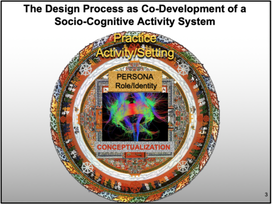
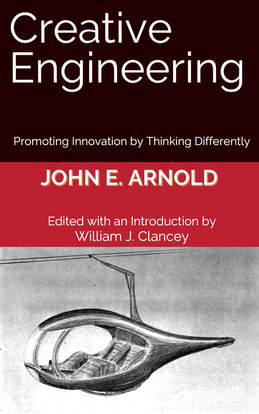
Can we relate neuroscience to design practice? At the Stanford Neurodesign Symposium on March 6, 2019, I presented a developmental perspective based on Arnold and Maslow's theory relating creativity to personal growth. Read the fully annotated presentation.
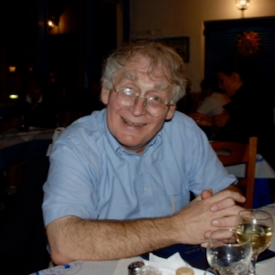
In memoriam master of complexity: Paul J. Feltovich (1947–2025). Illustrated version. Journal of Cognitive Engineering and Decision Making, 19(3), 243–249.
A testimony about our close friend and colleague, a psychologist who studied how people understand and describe complex systems. Paul identified general reasoning methods ("knowledge shields") by which people manage complexity, notably over-simplifying, which adversely affect the design of socio-technical systems in health care, aerospace, and other safety-critical applications.
See: My audio-visual presentation at the "FeltoFest" in Paul's honor (October 27, 2017).
A testimony about our close friend and colleague, a psychologist who studied how people understand and describe complex systems. Paul identified general reasoning methods ("knowledge shields") by which people manage complexity, notably over-simplifying, which adversely affect the design of socio-technical systems in health care, aerospace, and other safety-critical applications.
See: My audio-visual presentation at the "FeltoFest" in Paul's honor (October 27, 2017).